Khaka remix
Take a traditional Indian khaka (embroidery stencil), have the model describe it in detail, then swap one crucial design element while keeping everything else intact.
1 · The picked design

2 · The model's description
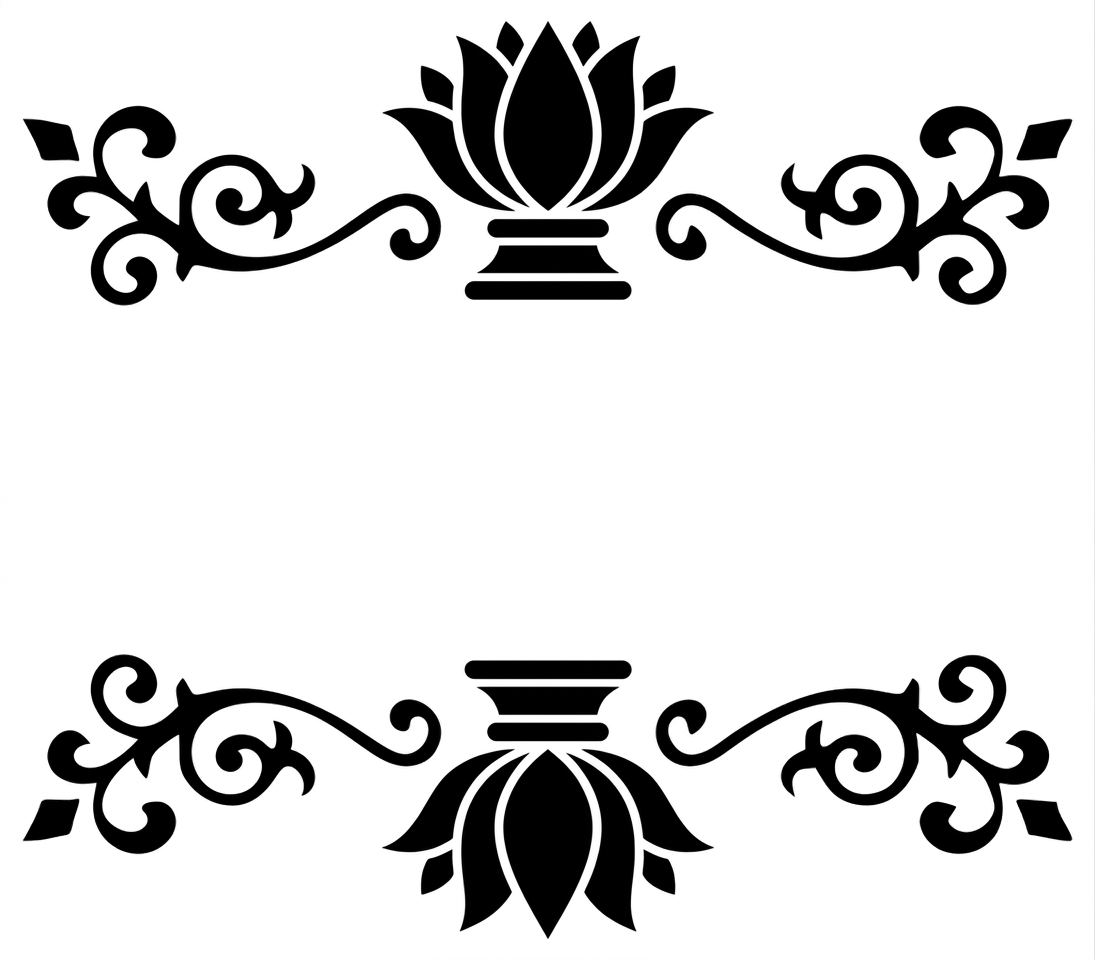
"This khaka consists of two identical horizontal decorative borders, one at the top and one at the bottom, which frame a wide, empty rectangular space in the centre. The composition exhibits dual-axis symmetry. At the exact centre of each border sits a highly stylised fleur-de-lis, a motif with strong heraldic and floral associations. Extending horizontally to the left and right is an elegant, flowing sequence of scrollwork reminiscent of classical European rinceaux or traditional Indian vine (bel) patterns. The line and silhouette character is defined by high-contrast, solid black shapes with no internal line work, shading, or texture. Thin, precise channels of negative white space are carved out to separate overlapping elements, ensuring the pattern remains highly legible when transferred onto fabric. The mood is stately, refined, and formal — perfectly suited for the borders of ceremonial textiles."
3 · The crucial swap
4 · Before & after
What this proves
The model can read a traditional design (recognising structural elements, motif language, even cultural register), accept a targeted change in natural language, and regenerate the design so that only the specified element is altered. The mirrored flourish bars, the scrollwork rhythm, the outward-pointing diamond tips, the flat-stencil treatment — all survive the swap.
This is the foundation of every later step. Once the model can edit a design without disturbing what wasn't asked to change, you can chain edits — change a motif here, recolour a panel there — and trust the result will still look like the same design.