Style transfer · 2 khakas × 2 embroidery techniques
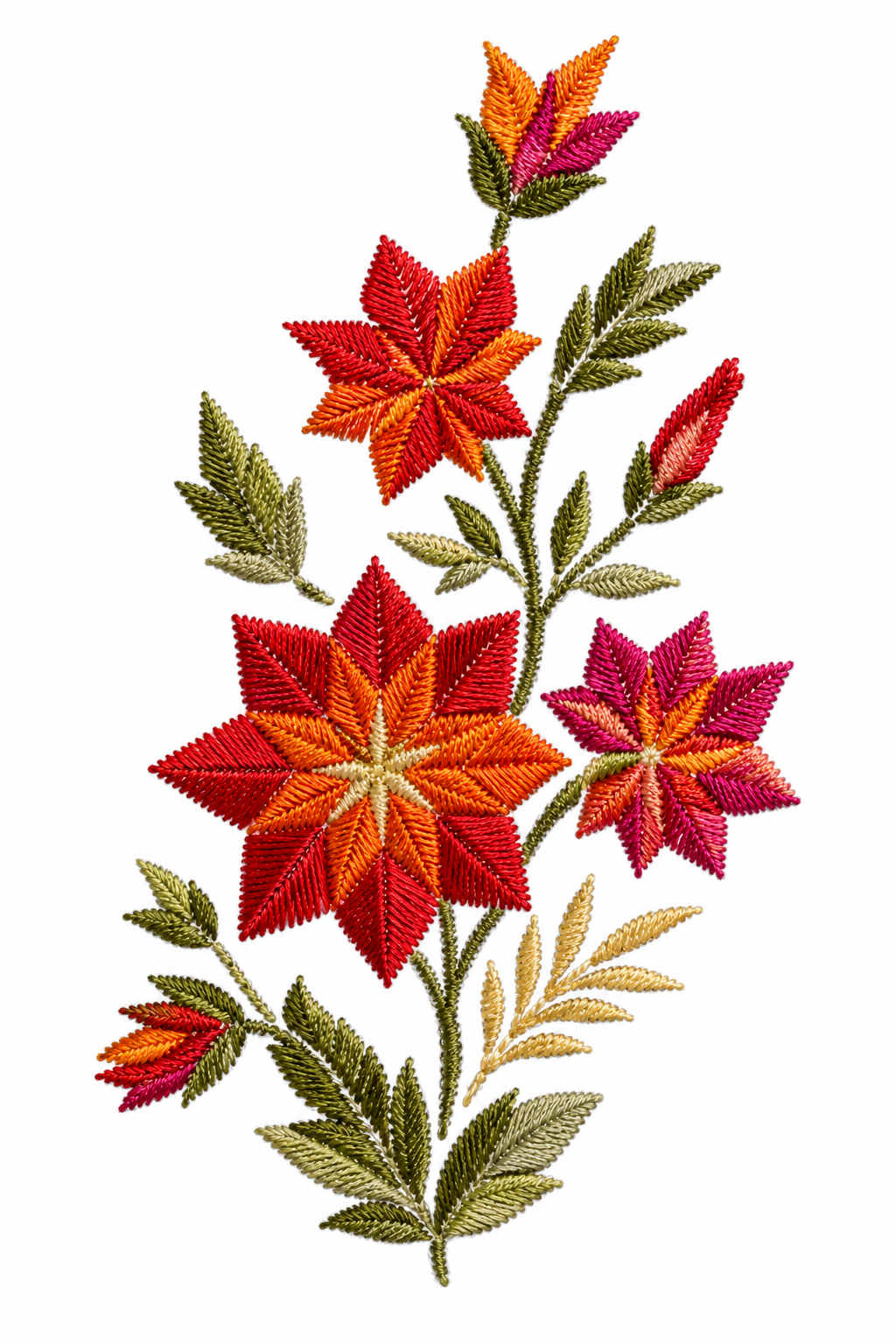
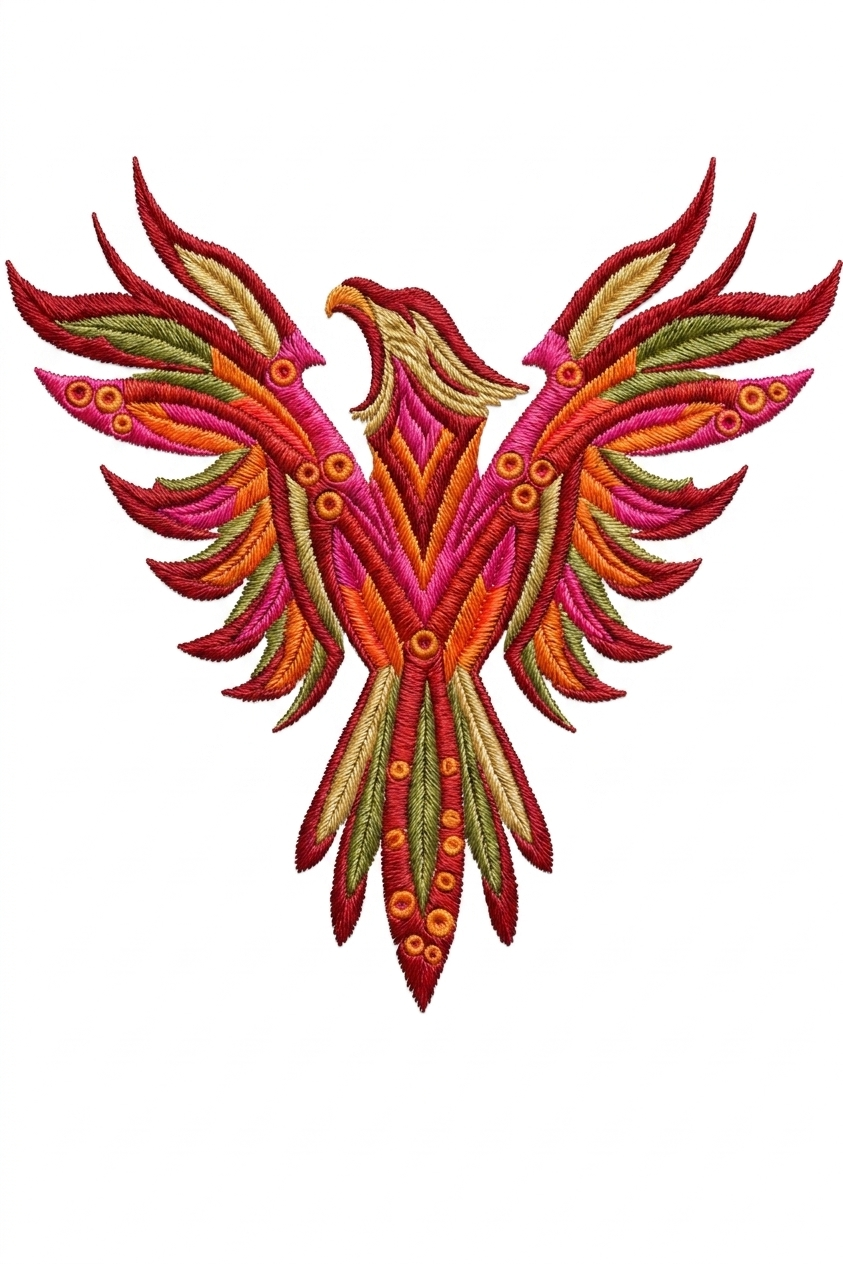
Take a plain khaka (composition: silhouette only) and re-render it in the style of a specific embroidery technique sampled from a reference swatch (palette, threadwork, surface). The composition stays fixed; only colour and surface change.
The grid

khaka (composition) |

khaka (composition) |
|
|---|---|---|
style (swatch) |

|
|
style (swatch) |

|

|
What carried over, and what didn't
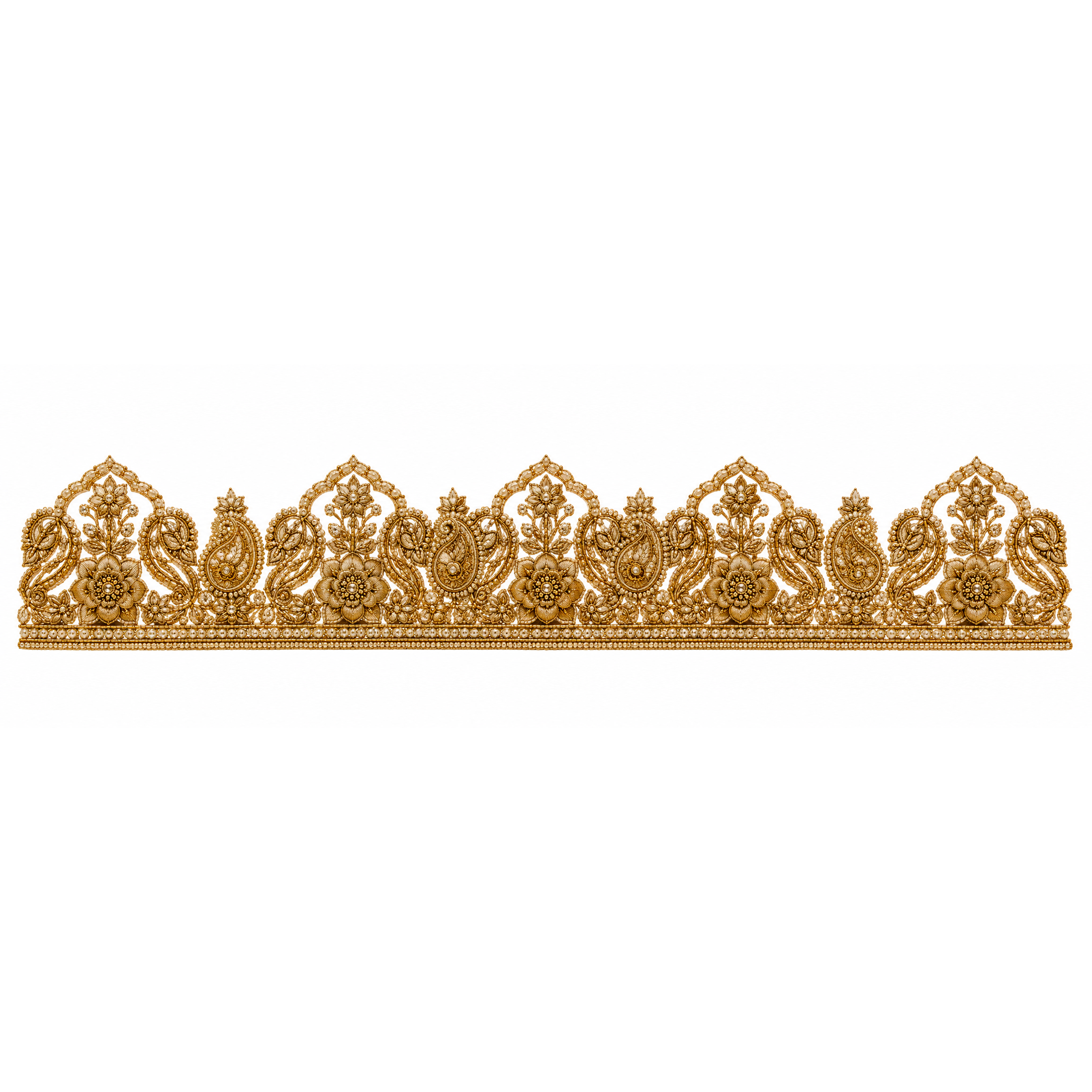
- Surface treatment is the strong axis. Phulkari unmistakably reads as Phulkari (vivid satin-stitch threadwork); Zardozi unmistakably reads as Zardozi (raised gold metalwork with pearl/bead accents). Both techniques are recognisable on both khaka shapes.
- Composition was preserved with explicit rules. First-pass output let the Zardozi swatch's horizontal-border bounding box leak into the result, flattening the khaka silhouettes. Encoding the constraint as a failure clause ("you have failed if output is wider than tall while image 1 is square") plus pre-padding the swatch to a square canvas closed the gap — both khakas now keep their proportions.
- Khaka hatching was correctly dropped. The phoenix silhouette has internal dotted-halftone fill in the source — a stencil tracing indicator, not a design element. The model treated it as such and replaced it with solid thread treatment.
What you could do with this
A designer can keep one master library of khaka silhouettes (the composition vocabulary of the house), and a separate library of technique swatches (Phulkari, Zardozi, Gota Patti, Chikankari, mirror work, Kashmiri Tilla …). Any swatch can be applied to any silhouette on demand, with the silhouette staying intact. This makes seasonal repalette and re-technique experiments cheap and reversible.